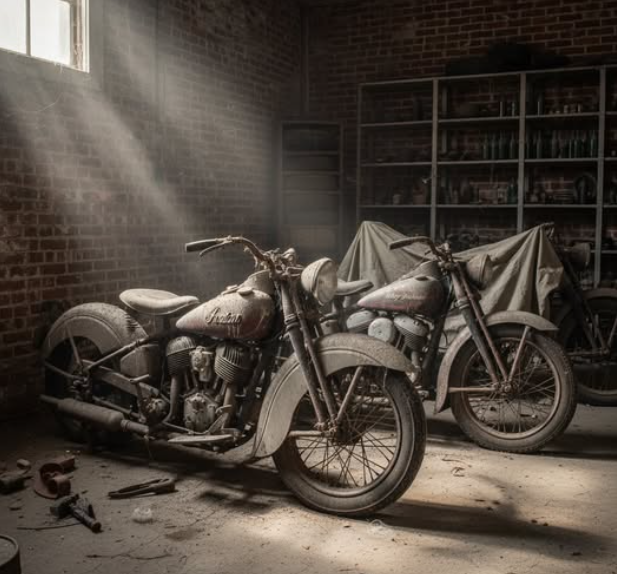
She’s waiting on you
That first warm spring Saturday always hits the same. Garage door rattles up, radio on, and there she is, waiting where you left her. You roll your bike up on the stand, tools get tossed down where there’s room, and a bucket of soapy water waiting to knock the winter dust off. Feels like sitting down with an old buddy you haven’t seen in a while—no words, no stress, just getting back acquainted.
I’ve got it better than most. Now living in Florida, my bike doesn’t really hibernate the way it did when I lived in Tennessee. But for folks who’ve had their machines parked for months, all – winter - long…its time to give her a once‑over, and show her you still give a damn.
I tell my son, a new rider, wide‑eyed and eager—that this part matters as much as the ride itself. You treat it like a pilot walking around his plane before takeoff. No shortcuts. No “good enough.” Some of us haul our kids, our wives, the people who trust us to bring them home safely. A lot of wrecks start way before the ride— they start right here in the garage, when somebody rushes things.
I always start with fluids. Oil first. Always. When a bike sits, moisture sneaks in where it doesn’t belong. Pull the dipstick and you can tell pretty quick if the oil’s done its time. Cloudy, dark, tired-looking, milky—it’s asking for a change. Liquid‑cooled bikes get a coolant check, hoses squeezed and looked over for cracks or soft spots. Brake fluid gets a glance through the glass. If it looks dark, that’s water in the system, and brakes don’t forgive that. Fresh fluids go a long way toward waking a bike up the right way.
Then I get down on the concrete. Tires don’t like sitting around. Pressure leaks off, rubber dries out, and flat spots sneak up on you. I air them back up, check the sidewalls close, scan the tread with a flashlight. Brake pads get a look too. They don’t make much noise when they’re worn—until you actually need them. Throttle and clutch cables get worked back and forth. If they don’t feel right in the garage, they damn sure won’t feel right at 70 miles an hour.
Next is the stuff that actually puts the power down. Belts get checked for trash, frayed edges, anything that looks off. Chains get cleaned, lubed, and checked link by link. I make a slow lap around the bike, hand on bolts and fasteners, giving everything a careful tug. Nothing flashy about this part—just making sure yesterday’s wrenching is still holding up today.
Electrical comes last. Batteries love to quit right when riding season starts. I clean the terminals, make sure they’re tight, and listen real close when I hit the starter for the starter dragging. Lights all get tested—headlight, high beam, turn signals, brake light from both ends. Bikes today rely on electronics more than ever, and spring’s when weak batteries finally wave the white flag.
If you do this work yourself, you figure something out over time. This isn’t just maintenance. It’s how you get to know your machine. A motorcycle will tell you what it needs if you give it the time. That quiet hour in the garage isn’t a chore—it’s therapeutic in some ways. It’s really a grease‑stained handshake before you ask it to carry you down the road again for another season.